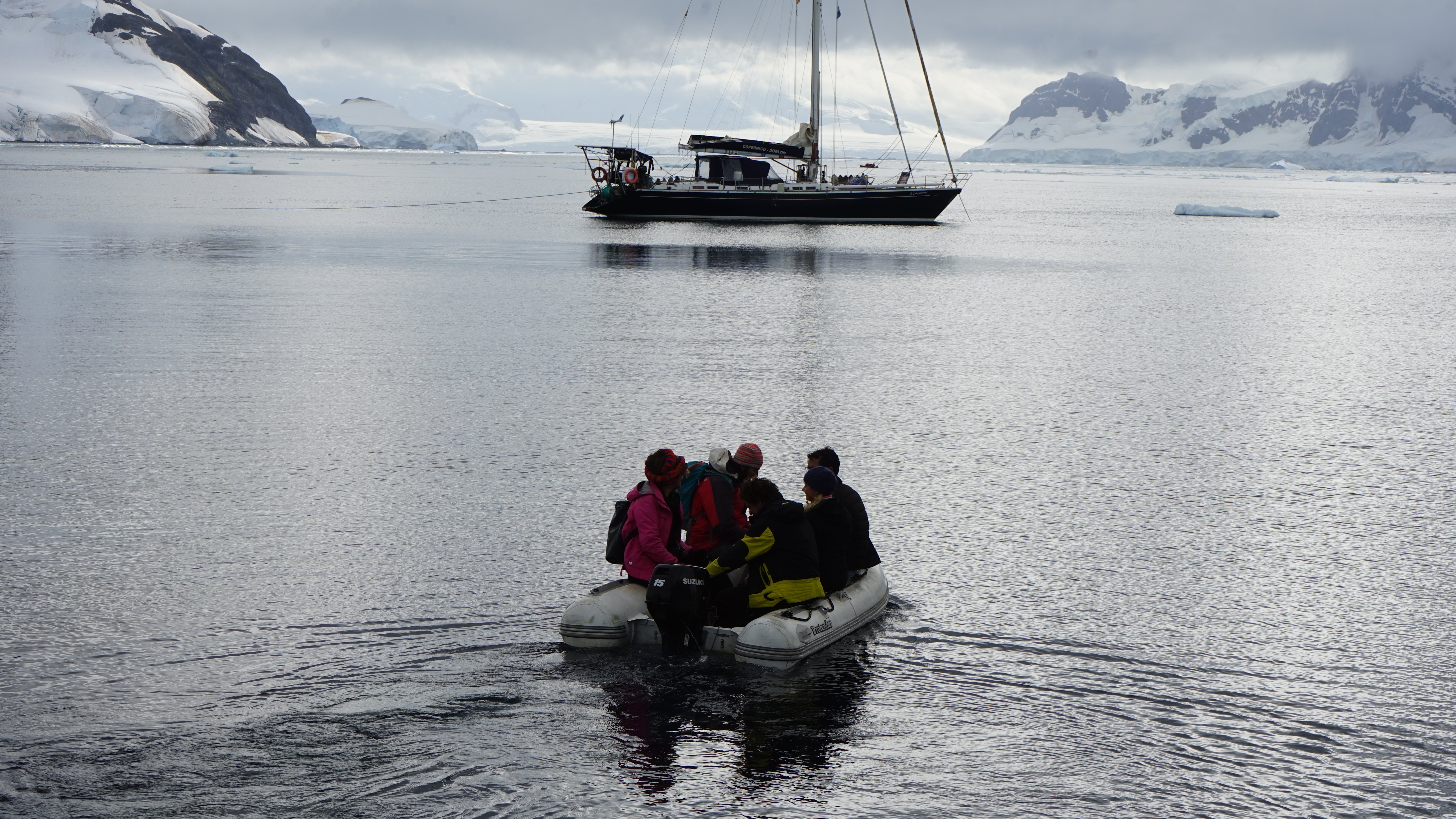
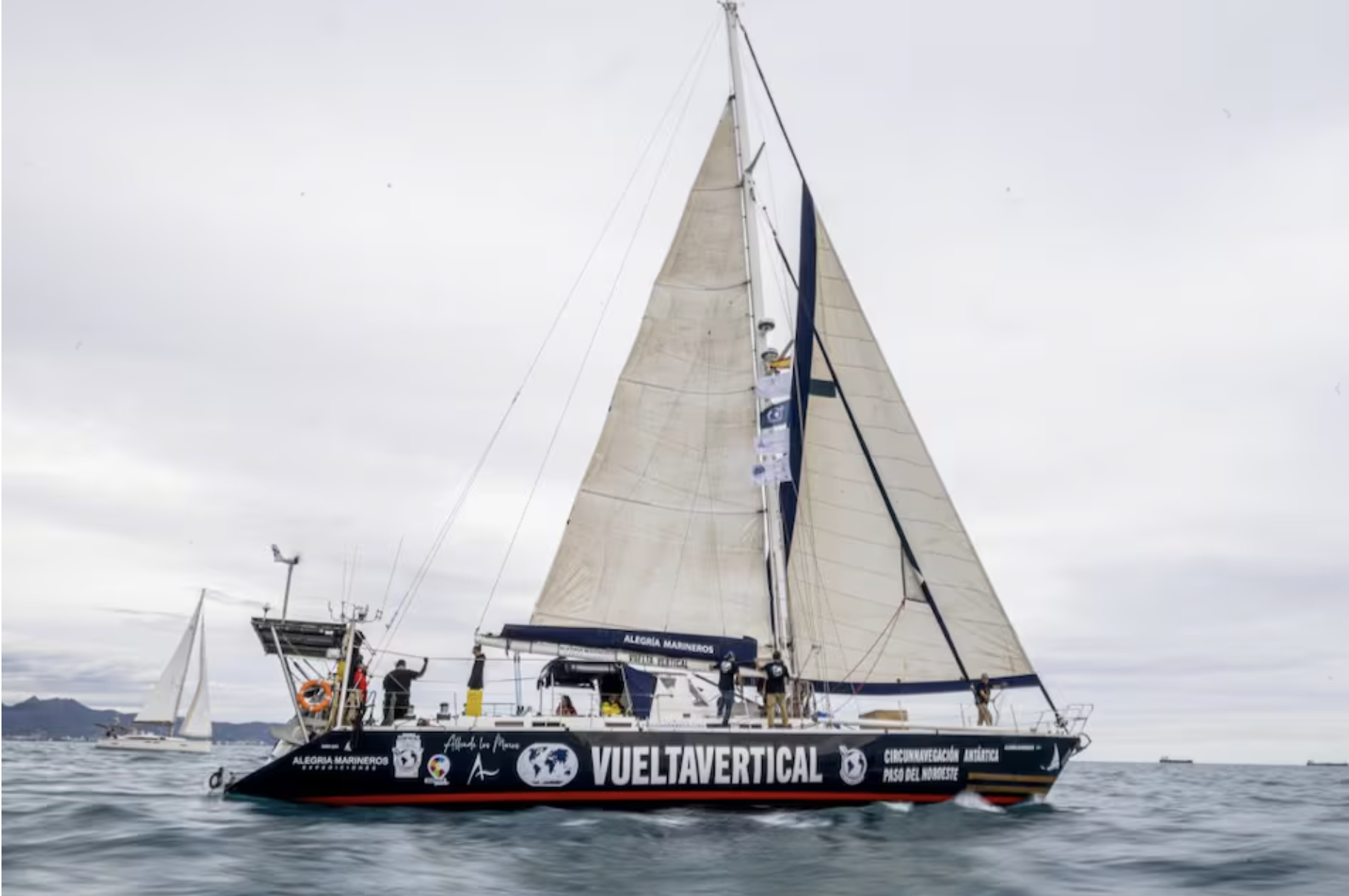
A 20-metre aluminium sailboat. Two Spaniards. Forty thousand miles connecting the two poles of the planet. And in every manoeuvre, every routing decision, every night watch among icebergs; B&G technology is always present.
There is a line on the charts that sailors recognize before they ever reach it. Not because of what the map shows, but because of what the body feels. At 50 degrees south, the ocean changes character. Waves are no longer just swell: they become moving architecture; ten-meter water structures shaped endlessly by the wind, uninterrupted for centuries because there is no land to stop them. Those who have been there speak of it with a mix of respect and something close to fascination. Those who have not yet arrived sense it in the weather reports.
Paula Gonzalvo and Pedro Jiménez have already crossed that line.
They are in the Southern Ocean aboard Alegría Marineros, a 20.5-metre (68-foot) aluminium sailboat designed specifically to withstand what very few boats in the world are built to endure. And they are doing so as part of Vuelta Vertical, an expedition that, since November 15th, 2025, redefines what it means to circumnavigate the globe under sail: not from east to west, as dictated by the trade winds and ocean tradition, but from south to north — from Antarctica to the Arctic — crossing five oceans and the Equator twice in a journey of more than 40,000 miles to be completed within twelve months.
This is not just another round-the-world voyage. It is, quite possibly, the most ambitious circumnavigation ever to depart from a Spanish port.
The idea no one had executed
Vuelta Vertical begins with a simple yet uncomfortable question: why has no one connected both poles in a single sailing expedition? The answer has several layers.
The first is technical: a vessel capable of navigating Antarctic latitudes and then forcing its way through the Arctic’s Northwest Passage requires a combination of strength, autonomy and redundancy that very few sailboats possess.The second is logistical: a route like this demands meticulous planning, extremely tight weather windows and a crew capable of enduring twelve months without real interruption. The third is human: it requires sailors who have already been to these places and understand that previous experience guarantees nothing — but does teach better decision-making.
Paula and Pedro meet all three conditions. But from the very beginning, they also knew that without the right technology, none of the above would be enough.